

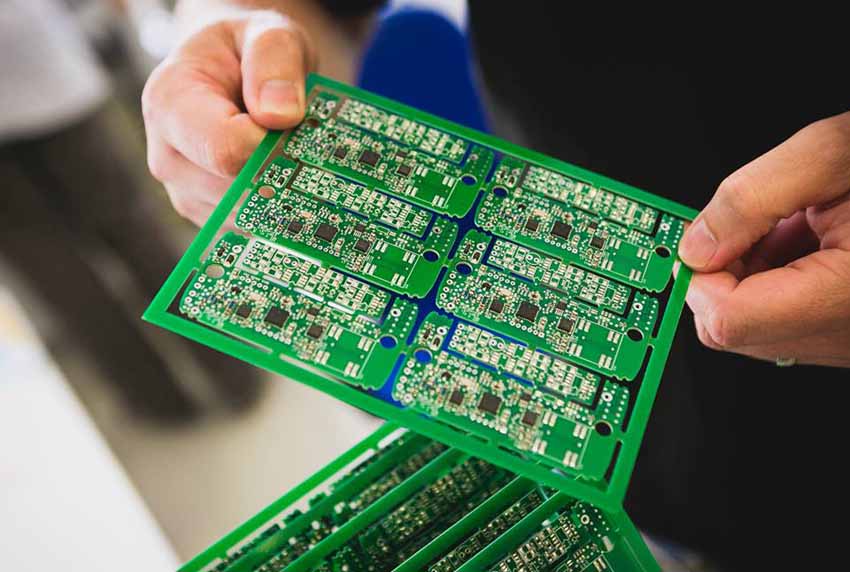
What Files and Data You Should Provide to Your PCB Assembly Manufacturer
Handing off the right files the first time saves days of back-and-forth, prevents build errors, and keeps your launch date intact. A reliable PCB assembly manufacturer can move fast, but only if your data is clear, complete, and consistent. Your partner’s PCB assembly servicesare only as quick and accurate as the package you send.
The core package (start here)
- Gerbers (or ODB++/IPC-2581): Include copper layers, solder mask, solder paste, silkscreen, drills, and the board outline. If you have panelization, provide the panel file, rails, and fiducials.
- BOM (Bill of Materials): Use one master spreadsheet with Reference Designators, Quantity, Manufacturer Part Number (MPN), Description, Package, and any Approved Alternates. Mark “DNP/Do Not Populate” lines clearly.
- Pick-and-Place/Centroid (XY) file: Provide X/Y coordinates, rotation, side (top/bottom), and the designator for each part. State units (mm or mil) and the board origin you used.
- Drawings (Fabrication + Assembly): Call out stackup, board thickness, finish (e.g., ENIG), controlled impedance notes, polarity and pin-1 marks, keep-outs, special solder or reflow requirements, and any mechanical details.
That single checklist, delivered in a clean zip with a clear revision number, is the foundation of a smooth build.
Make the BOM unambiguous
A strong BOM is specific and current. Use the manufacturer’s exact MPN, not just a distributor SKU. Include the package (e.g., 0402, QFN-48) and the value/tolerance where it matters. For supply resilience, list vetted alternates in a separate column. If the job is consigned, note which parts you are shipping and how many spares per reel/tube you’ll include. If it’s turnkey, note any brand preferences or parts to avoid. This level of detail lets procurement start immediately and keeps substitutions under your control.
Get the centroid right
Assembly speed lives and dies on accurate XY data. Confirm your units, origin, and rotation convention match your CAD export and the drawing. Include side flags (T/B). If you changed footprints late, regenerate the file so pin-1 and polarity agree with the silkscreen and the assembly drawing. A one-minute check here can save an entire day on the line.
What the drawings should settle
Your fabrication drawing should confirm stack-up, copper weight, overall thickness, finish, controlled impedance targets, hole sizes, and any special materials. Your assembly drawing should point out polarity, pin-1, connectors that require hand soldering, press-fit parts, keep-outs, and any mechanical interferences with the enclosure. If you need a stencil, state thickness, and any special aperture reductions or windowpane patterns for large pads.
Panelization and fiducials
If you supply a panel, include global fiducials, tooling holes, and break-off tabs. If you want the shop to panelize, give them your enclosure and test needs, then approve their array. Good arrays improve throughput, reduce handling damage, and lower cost by increasing parts-per-panel.
Test and programming info
Tell the shop how you will verify the build. Provide a simple bring-up plan (power sequence, expected currents/rails, LEDs that should light) and a test-point map if you have one. If devices must be programmed, include firmware files, version notes, and the connector or pogo header to use. If serial numbers, MAC addresses, or calibration data are required, include the format and where to place labels.
Data hygiene and revisions
Put everything in one folder, zip it, and label it with a single revision (for example, “Rev C”). Inside, include a short README that lists file names, CAD tool version, and any special notes (lead-free, no-clean flux, X-out policy). When you issue an ECO, send only the files that changed and bump the revision. This discipline helps a PCB assembly manufacturer lock tooling and avoid mixing old and new data.
DFM before you buy parts
Ask for a quick DFM/DFT pass before committing to components and stencil. Shops that deliver professional PCB assembly serviceswill flag risk areas, via-in-pad that needs to be filled, parts too close for the pick head, missing test access, or paste apertures that may cause shorts. Fixing those items in CAD is far cheaper than reworking boards after reflow.
Conclusion
Before sending design files, make sure they clearly show what to build, which parts to use, where each part goes, how they should be oriented, the board and stencil thickness, and the steps for testing. When data is clear and consistent, quoting becomes building, and building becomes shipping, allowing a manufacturer to deliver PCB assembly services on time and at high quality.