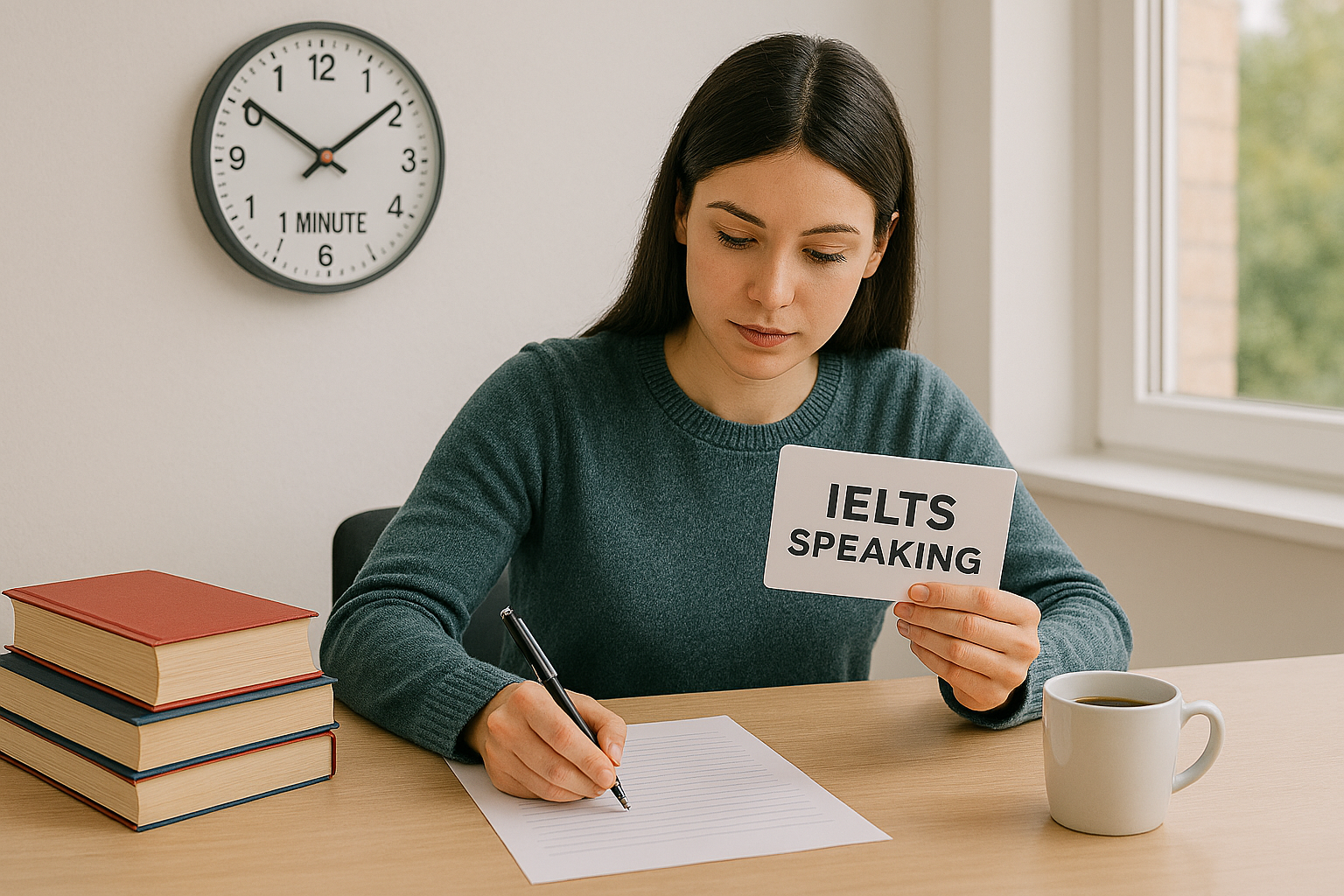
What Is an IELTS Cue Card? A Complete Guide for Test Takers
If you are preparing for the IELTS speaking test, one term you’ll often come across is the IELTS cue card. This simple yet crucial component of the speaking section can make a big difference in your overall band score. But what exactly is a cue card, and why is it so important? In this guide, we’ll cover everything you need to know about IELTS cue cards, including their structure, common speaking cue cards topics, preparation tips, and strategies to ace this part of the test.
What Is an IELTS Cue Card?
An IELTS cue card is a small card provided to you during Part 2 of the IELTS Speaking Test. This section is often called the long-turn because you are expected to speak for 1–2 minutes without interruption. The cue card contains a topic and 3–4 bullet points that you need to cover in your response.
For example:
Describe a memorable journey you had. You should say:
- Where you went
- How you traveled
- What happened during the journey
- And explain why it was memorable
You will be given 1 minute to prepare before speaking, and you can make notes during this time. After that, you need to talk for about two minutes.
Why Is the IELTS Cue Card Important?
The IELTS cue card section plays a critical role in your overall speaking band score because it tests your ability to:
- Speak fluently on a given topic
- Organize your ideas logically
- Use a wide range of vocabulary
- Demonstrate accurate grammar and pronunciation
Scoring well in this section requires confidence, organization, and language flexibility.
Structure of the Cue Card Section
To understand this better, let’s break down the steps:
- You receive a cue card with a topic and points to discuss.
- You get 1 minute to prepare – during this time, you can jot down keywords.
- You speak for 1–2 minutes on the topic.
- The examiner may ask 1–2 follow-up questions after you finish.
Common IELTS Speaking Cue Card Topics
There are hundreds of possible topics, but most fall under these categories:
- Personal Experiences: A memorable trip, favorite teacher, first job experience
- Hobbies and Interests: A book you enjoyed reading, a sport you like, your favorite movie
- People and Relationships: Someone who inspires you, a person you admire, a family tradition
- Places: A city you want to visit, a historical building, a peaceful place you know
- Events: A recent celebration, a festival in your country, an important meeting
Here are some popular IELTS speaking topics for practice:
- Describe your favorite holiday destination
- Talk about a book that influenced you
- Describe an invention that changed the world
- Talk about a skill you want to learn in the future
Tips to Master IELTS Cue Cards
✅ 1. Understand the Question Properly
Read the card carefully and ensure you understand what each bullet point asks.
✅ 2. Use Your 1-Minute Preparation Wisely
- Write down keywords for each bullet point.
- Think of a storyline or a sequence for your response.
✅ 3. Follow a Simple Structure
- Introduction: Rephrase the topic in your own words.
- Body: Cover all bullet points with details and examples.
- Conclusion: Summarize your opinion or feeling about the topic.
✅ 4. Practice Paraphrasing
Avoid repeating words from the cue card. Use synonyms and different sentence structures.
✅ 5. Expand Your Answer
Don’t give short answers. Add details, examples, and reasons to make your response engaging.
✅ 6. Focus on Fluency and Coherence
Speaking without long pauses is important. Practice speaking for 2 minutes continuously.
✅ 7. Use a Range of Vocabulary and Grammar
Showcase your language skills with idioms, linking words, and correct grammar.
Sample IELTS Cue Card with Answer
Cue Card Topic: Describe a hobby you enjoy.
You should say:
- What the hobby is
- How you started doing it
- How often you do it
- And explain why you enjoy it
Sample Answer:
“One of my favorite hobbies is reading books. I started this habit when I was in school because my English teacher encouraged us to read daily. I usually spend at least 30 minutes a day reading, especially before bedtime. I enjoy this hobby because it helps me relax, improves my vocabulary, and allows me to learn new things. Reading has truly become an essential part of my life.”
How to Practice Effectively
- Record Yourself: Use your phone to practice speaking on different cue card topics.
- Use a Timer: Speak for at least 2 minutes without stopping.
- Get Feedback: Practice with a friend or a tutor who can point out mistakes.
- Explore Online Resources: Check out sample cue cards and model answers for guidance.
Final Thoughts
The IELTS cue card section may seem challenging, but with regular practice and the right strategy, you can master it. Focus on developing your fluency, vocabulary, and confidence. Remember, the key is not just to speak but to communicate naturally and clearly.
Start practicing today, and explore various IELTS speaking topics to build confidence for your test day!