

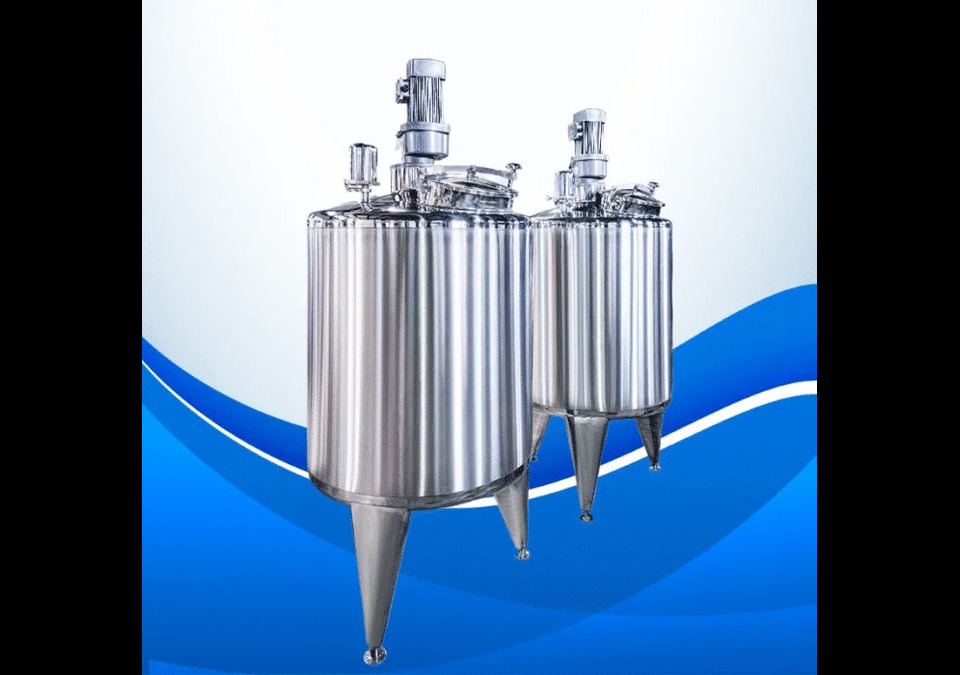
Dead Zones in Your Mixing Tank: Identification and Elimination
Industrial mixing operations depend heavily on achieving uniform distribution of materials throughout the entire volume of a mixing tank. However, one of the most common challenges that operators face is the formation of dead zones – areas within the tank where fluid movement is minimal or completely absent. These stagnant regions can significantly compromise process efficiency, product quality, and operational costs.
Dead zones represent areas where the mixing energy fails to reach, creating pockets of unmixed or poorly mixed material. This phenomenon occurs in various industrial applications, from chemical processing and pharmaceutical manufacturing to food production and wastewater treatment. Understanding how to identify and eliminate these problematic areas is essential for maintaining optimal mixing performance and ensuring consistent product quality.
Understanding Dead Zones in Mixing Operations
What Are Dead Zones?
Dead zones are regions within a mixing tank where fluid velocity approaches zero, resulting in minimal mass transfer and poor mixing efficiency. These areas typically form in locations where the impeller’s influence diminishes, such as tank corners, behind baffles, or in areas with geometric irregularities. The presence of dead zones can lead to several operational issues, including incomplete reactions, product inconsistency, and increased processing times.
The formation of dead zones is influenced by multiple factors, including tank geometry, impeller design, fluid properties, and operating conditions. In many cases, these stagnant regions develop gradually as operating parameters change or equipment ages, making them difficult to detect without proper monitoring techniques.
Impact on Process Efficiency
Dead zones significantly affect overall mixing tank performance by creating areas where reactants remain unconverted, additives fail to distribute properly, or particles settle out of suspension. This uneven mixing can result in batch-to-batch variations, reduced yield, and potential safety hazards when dealing with reactive materials.
The economic impact of dead zones extends beyond immediate product quality issues. Extended mixing times required to compensate for poor circulation increase energy consumption and reduce throughput. Additionally, the accumulation of materials in stagnant areas can lead to fouling, corrosion, or microbial growth, necessitating more frequent cleaning cycles and maintenance interventions.
Identification Methods for Dead Zones
Visual Assessment Techniques
One of the most straightforward approaches to identifying dead zones involves visual observation during mixing operations. This method works particularly well when dealing with miscible liquids of different colors or when adding tracers to the system. Operators can observe areas where color blending occurs slowly or incompletely, indicating regions of poor circulation.
Particle tracking represents another visual method where neutrally buoyant particles or dye tracers are introduced into the mixing tank. Areas where particles accumulate or move slowly reveal the location of dead zones. While this approach provides immediate feedback, it requires transparent tank walls and may not be suitable for all process conditions.
Advanced Detection Technologies
Modern computational fluid dynamics (CFD) modeling has revolutionized dead zone identification by providing detailed flow field visualization without disrupting normal operations. CFD simulations can predict flow patterns, identify stagnant regions, and evaluate the effectiveness of different mixing configurations before implementation.
Residence time distribution (RTD) studies offer another sophisticated approach to dead zone detection. By measuring how long tracer materials remain in the system, engineers can identify areas with poor circulation and quantify mixing efficiency. This technique provides valuable data for optimizing mixing parameters and validating CFD predictions.
Ultrasonic flow measurement and thermal imaging technologies have emerged as non-invasive methods for detecting dead zones in operating systems. These techniques can identify areas with reduced fluid movement or temperature variations that indicate poor mixing without requiring system modifications or process interruptions.
Common Locations of Dead Zone Formation
Geometric Dead Zones
Certain areas within a mixing tank are inherently prone to dead zone formation due to geometric constraints. Tank corners, particularly in rectangular or square vessels, often experience reduced circulation as impeller-generated flow patterns tend to follow curved paths. The region directly beneath the impeller hub typically receives minimal mixing energy, creating a stagnant zone that can accumulate settled materials.
Areas behind baffles frequently develop dead zones, especially when baffle design or positioning is suboptimal. While baffles are essential for preventing vortex formation and improving mixing efficiency, poorly designed or incorrectly positioned baffles can create shadow zones where fluid movement is restricted.
Process-Related Dead Zones
Dead zones can also form as a result of process conditions and operating parameters. High-viscosity fluids tend to create larger stagnant regions due to reduced fluid mobility and limited circulation patterns. Temperature gradients within the mixing tank can establish density differences that inhibit vertical mixing and create stratified layers with minimal interaction.
The liquid level in the mixing tank significantly influences dead zone formation. Operating at very low liquid levels can result in inadequate impeller submersion, creating stagnant areas above the liquid surface or in tank corners. Conversely, overfilling the tank can reduce the effectiveness of surface-mounted equipment and create dead zones near the tank top.
Elimination Strategies and Solutions
Impeller Selection and Positioning
Selecting the appropriate impeller type and size is fundamental to eliminating dead zones in a mixing tank. Axial flow impellers, such as pitched blade turbines, generate strong vertical circulation patterns that help eliminate dead zones in tank corners and bottom regions. Radial flow impellers create horizontal circulation patterns that are effective for breaking up stagnant areas behind baffles.
Multiple impeller configurations can address dead zones that single impellers cannot reach effectively. By positioning impellers at different elevations and orientations, operators can create overlapping circulation patterns that minimize stagnant regions throughout the tank volume. The spacing between multiple impellers requires careful consideration to ensure adequate interaction without interference.
Impeller positioning relative to tank bottom, liquid surface, and baffles significantly affects dead zone formation. Optimal positioning typically places the impeller at one-third to one-half of the liquid depth from the tank bottom, though specific applications may require different configurations based on process requirements and fluid properties.
Baffle Design and Optimization
Proper baffle design plays a crucial role in eliminating dead zones while maintaining mixing efficiency. Standard baffle configurations typically employ four equally spaced vertical plates with specific width-to-diameter ratios. However, modifications such as angled baffles, curved baffles, or variable-width designs can address specific dead zone issues.
The clearance between baffles and tank walls must be carefully controlled to prevent dead zone formation while allowing adequate circulation. Insufficient clearance creates stagnant areas behind baffles, while excessive clearance reduces baffle effectiveness in preventing swirl and vortex formation.
Tank Geometry Modifications
Modifying tank geometry represents a more substantial but often highly effective approach to dead zone elimination. Converting sharp corners to rounded transitions reduces stagnant areas and improves overall circulation patterns. Adding sloped or conical tank bottoms can eliminate dead zones that commonly form in flat-bottom tank corners.
Tank aspect ratio optimization involves adjusting the height-to-diameter ratio to achieve optimal mixing patterns for specific applications. Tall, narrow tanks may require multiple impellers to address dead zones, while short, wide tanks might benefit from larger diameter impellers or alternative configurations.
Installing circulation promoters, such as draft tubes or flow-directing elements, can redirect flow patterns to previously stagnant areas. These modifications help extend impeller influence throughout the tank volume and reduce the formation of dead zones.
Process Optimization Techniques
Operating Parameter Adjustment
Fine-tuning operating parameters often provides immediate improvements in dead zone elimination without requiring hardware modifications. Impeller speed optimization involves finding the optimal rotation rate that maximizes circulation while minimizing energy consumption and mechanical stress.
Liquid level management ensures that impellers operate within their designed range and that tank geometry promotes effective circulation. Maintaining consistent liquid levels during batch operations prevents the formation of temporary dead zones that can affect product quality.
Monitoring and Control Systems
Implementing continuous monitoring systems enables real-time detection and correction of dead zone formation. Temperature, pH, conductivity, or other process parameter sensors strategically placed throughout the mixing tank can identify areas with poor circulation based on measurement variations.
Automated control systems can adjust mixing parameters in response to detected dead zones, maintaining optimal mixing conditions throughout the process cycle. These systems can modify impeller speed, activate auxiliary mixing devices, or trigger corrective actions when dead zones are detected.
Regular maintenance schedules ensure that mixing equipment operates at peak efficiency and that dead zones do not develop due to equipment degradation. Impeller inspection, bearing maintenance, and system cleaning help maintain optimal mixing performance and prevent dead zone formation.
The elimination of dead zones in mixing tank operations requires a comprehensive understanding of fluid dynamics, equipment design, and process optimization. Through proper identification techniques, strategic equipment selection, and ongoing monitoring, operators can achieve uniform mixing throughout the entire tank volume. This systematic approach to dead zone management results in improved product quality, increased process efficiency, and reduced operational costs across various industrial applications.
