

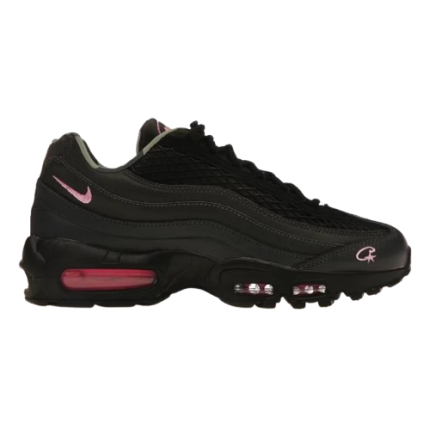
Nike Air Max 95 vs. Air Max 90: A Tale of Two Classics
Few sneaker lines have left as indelible a mark on culture as Nike’s Air Max series. Among the many beloved iterations, two models stand tall as timeless staples: the Nike Air Max 90 and the Nike Air Max 95. Though they share the same DNA—Nike’s revolutionary Air technology—they differ significantly in design, history, and cultural impact. This article explores the story of each model, their key differences, and why both remain so relevant decades after their initial release.
Origins: Innovation Born in Different Eras
Air Max 90 (originally released as the Air Max III):
The Air Max 90 debuted in 1990, designed by the legendary Tinker Hatfield, the mind behind many of Nike’s most celebrated silhouettes. Building on the foundation of the Air Max 1 (1987), the AM90 introduced a more visible Air unit in the heel, along with a bolder, layered upper. Its aggressive design, accentuated by the famous “Infrared” colorway, gave the shoe a modern, high-speed aesthetic. While performance was a focus, the AM90 quickly gained a cult following in lifestyle and streetwear circles.
Air Max 95:
Released in 1995 and designed by Sergio Lozano, the Air Max 95 took a drastic turn from previous Air Max models. Lozano was inspired not by architecture (like Hatfield’s muse) but by human anatomy. The 95’s layered upper mimicked muscle fibers and tendons, and for the first time, the shoe featured visible Air in the forefoot as well as the heel. The OG “Neon” colorway—a grayscale gradient accented with electric green—was shocking at the time, but it became an instant classic.
Design: Anatomy vs. Architecture
The differences in design between the Air Max 90 and 95 are perhaps the most striking aspect when comparing the two.
Air Max 90:
- A mix of mesh, suede, and leather in an architectural layout
- Features a prominent midsole with a visible Air unit in the heel
- Wedge-shaped profile with pronounced overlays and plastic detailing around the Air bubble and lace area
- Typically features brighter, retro colorways like Infrared, Laser Blue, and Volt
- More “open” toe box and slimmer overall silhouette
Air Max 95:
- Gradient suede and mesh upper modeled after muscle fibers and skin
- Innovative lacing system with nylon loops for a snug, glove-like fit
- First Air Max to feature forefoot Air units
- A bulkier, more rugged appearance—both futuristic and organic
- Often seen in moodier, high-contrast colorways like Neon, Solar Red, or Greedy
Where the AM90 feels sporty and aerodynamic, the AM95 feels visceral and muscular. Each shoe’s design speaks to a different kind of energy—speed and precision versus strength and movement.
Comfort and Performance
While neither sneaker is considered cutting-edge performance footwear by today’s standards, both were innovative in their time.
The Air Max 90 provides a soft, cushioned ride, especially in the heel. It feels relatively light on foot and adapts well to casual wear or light activity. The AM90’s comfort has stood the test of time, especially with updated versions featuring modern materials like Nike’s “Essential” and “FlyEase” iterations.
The Air Max 95, however, offers more cushioning throughout the foot due to its dual Air units in the heel and forefoot. It also has a snugger fit because of its lacing system, making it feel more secure. Some users find the 95 more supportive for extended wear, while others find it heavier and more rigid than the 90.
Ultimately, the choice between the two comes down to personal preference: the lighter, sleeker feel of the AM90 or the structured, plush support of the AM95.
Cultural Impact and Legacy
Air Max 90:
The 90 is one of Nike’s most reissued models. Its versatile shape, color-blocking options, and endless collaborations have kept it in the public eye for over three decades. It’s been embraced by sneakerheads, runners, skaters, and streetwear icons alike. The AM90 has been reimagined in countless limited editions, such as those by Off-White, DQM (Bacon), and Patta. Its ability to blend with casual or hype fashion keeps it relevant year after year.
Air Max 95:
While the AM90 is universally loved, the 95 has always carried an edgier, more subcultural identity. In the UK, for example, the 95 became a staple in grime and garage scenes. In the US, it was frequently associated with urban fashion, hip-hop, and even outlaw aesthetics. The AM95 wasn’t just a shoe—it was a statement. Nike leaned into this legacy with retro releases and collaborations like Comme des Garçons, atmos, and Stüssy.
Despite its bold design, the 95 has become increasingly popular in high fashion circles. Its distinctive silhouette makes it a go-to for designers looking to push boundaries.
Which Should You Choose?
Both the Air Max 90 and 95 are excellent choices, and the “better” option largely depends on your style and how you intend to wear them.
- Choose the Air Max 90 if you want a classic sneaker with vintage appeal, lighter materials, and a sleek shape. It’s easier to wear with a wider range of outfits—from jeans to joggers—and works well in warmer weather.
- Choose the Air Max 95 if you’re after a more statement-making shoe with maximum cushioning and a bold look. It’s best suited for people who like streetwear, chunkier silhouettes, and sneakers that stand out.
Conclusion
The Nike Air Max 90 and Air Max 95 are more than just retro runners—they’re symbols of design innovation, cultural identity, and timeless cool. Whether you lean toward the fast, sporty lines of the AM90 or the anatomical boldness of the AM95, you’re stepping into a rich legacy of style and performance. Few shoes have remained so relevant for so long—and that’s a testament to Nike’s unparalleled ability to blend form, function, and cultural resonance.