Polylactic Acid Price Trends 2025 & Forecast | IMARC Group
Polylactic Acid Price Trend in North America: Q2 2025 Overview
Polylactic Acid Prices in the United States:
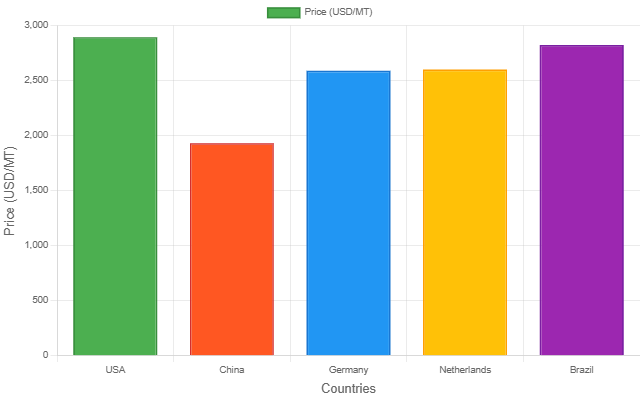
In Q2 2025, Polylactic Acid Prices in the United States averaged around US$2,895/MT. The price remains elevated due to growing demand in the packaging and bioplastic industries. According to Polylactic Acid Historical Price Data, U.S. prices have shown a consistent upward trend driven by domestic consumption, innovation in green technologies, and ongoing investments in sustainable production infrastructure.
Get the Real-Time Prices Analysis: https://www.imarcgroup.com/polylactic-acid-pricing-report/requestsample
Note: The analysis can be tailored to align with the customer’s specific needs.
Polylactic Acid Price Trends in APAC – Q2 2025 Overview
Polylactic Acid Prices in China:
China reported Polylactic Acid Prices of approximately US$1,930/MT in Q2 2025. Prices remain competitive due to large-scale production and technological efficiency. Polylactic Acid Historical Price Data indicates that China maintains the lowest global prices, influenced by abundant raw materials, low manufacturing costs, and a strong focus on exporting to meet international bio-based material demand.
Regional Analysis: The price analysis can be extended to provide detailed polylactic acid price information for the following list of countries.
China, India, Indonesia, Pakistan, Bangladesh, Japan, Philippines, Vietnam, Thailand, South Korea, Malaysia, Nepal, Taiwan, Sri Lanka, Hong Kong, Singapore, Australia, and New Zealand, among other Asian countries.
Polylactic Acid Price Trends in Europe – Q2 2025 Overview
Polylactic Acid Prices in Germany:
During Q2 2025, Polylactic Acid Prices in Germany stood at around US$2,590/MT. The pricing reflects stable demand in the biopolymer sector and higher input costs. As shown in Polylactic Acid Historical Price Data, Germany’s prices have gradually increased due to regulatory support for sustainable materials, rising energy prices, and growing adoption in the automotive and packaging sectors.
Polylactic Acid Prices in the Netherlands:
The Netherlands saw average Polylactic Acid Prices of US$2,600/MT in Q2 2025. Prices have remained firm due to strong demand from the European packaging and consumer goods industries. Polylactic Acid Historical Price Data highlights that pricing here closely follows broader EU trends, shaped by green policy incentives, logistics costs, and import-export dynamics within the region.
Regional Analysis: The price analysis can be expanded to include detailed polylactic acid price data for a wide range of European countries:
such as Germany, France, the United Kingdom, Italy, Spain, Russia, Turkey, the Netherlands, Poland, Sweden, Belgium, Austria, Ireland, Switzerland, Norway, Denmark, Romania, Finland, the Czech Republic, Portugal, and Greece, along with other European nations.
Polylactic Acid Price Trends in Latin America – Q2 2025 Overview
Polylactic Acid Prices in Brazil:
In Q2 2025, Polylactic Acid Prices in Brazil averaged US$2,823/MT. The market reflects moderate growth fueled by increasing interest in biodegradable materials across industries. Based on Polylactic Acid Historical Price Data, Brazil’s prices have steadily risen in response to shifting consumer preferences, limited domestic production, and the influence of international price fluctuations and currency rates.
Regional Analysis: The price analysis can be extended to provide detailed polylactic acid price information for the following list of countries.
Brazil, Mexico, Argentina, Colombia, Chile, Ecuador, and Peru, among other Latin American countries.
Factors Affecting Polylactic Acid (PLA) Price Trend, Index, and Forecast
Feedstock Costs: Prices of corn starch, sugarcane, and lactic acid directly impact PLA production costs. Fluctuations in agricultural commodity prices or supply can quickly influence market pricing.
Supply and Demand: Expanding production capacity, especially in Asia, can lead to oversupply and price drops, while strong demand from packaging, 3D printing, textiles, and agriculture supports price stability or growth.
Sustainability Regulations: Government policies promoting biodegradable plastics and bans on single-use plastics are driving demand, particularly in Europe and North America.
Production and Logistics: Disruptions in manufacturing, transportation, or supply chains can cause temporary price spikes or shortages.
Market Competition: More producers and technological advancements can help lower costs over time, but also create competitive pricing pressures.
Regional Trends: Europe often sees higher prices due to strong sustainability initiatives, while Asia may experience lower prices from increased supply and variable demand.
Polylactic Acid (PLA) Pricing Forecast:
According to the Polylactic Acid Price Forecast 2025 Data, PLA prices are expected to remain sensitive to changes in feedstock costs, supply-demand balance, and evolving sustainability regulations. While short-term volatility may continue, long-term growth is supported by expanding applications and global demand for eco-friendly materials. Regional price differences will persist, shaped by local production capacity and regulatory support.
FAQs about Polylactic Acid (PLA) Price Trend and Forecast
What is the current trend in Polylactic Acid prices?
Polylactic Acid prices are witnessing moderate fluctuations due to rising raw material costs, supply chain pressures, and increasing demand from the packaging and bioplastics sectors. Asia and Europe have seen slight price increases, while North America remains relatively stable.
What is the price forecast for Polylactic Acid in 2025?
PLA prices in 2025 are expected to rise steadily, driven by expanding demand for sustainable packaging and bioplastics. However, advancements in production technology and improved feedstock supply may help balance future price increases.
What influences the price of Polylactic Acid globally?
Polylactic Acid prices are influenced by corn and sugarcane feedstock costs, global demand for biodegradable plastics, energy prices, regulatory changes, and technological developments in PLA production.
Will Polylactic Acid become cheaper in the future?
PLA may become more affordable if bio-refining processes become more efficient and raw material supply improves. However, rising demand for eco-friendly plastics could keep prices firm over the long term.
What drives Polylactic Acid price trends?
PLA price trends are driven by feedstock availability, global sustainability initiatives, production costs, energy prices, and demand from industries like packaging, textiles, and automotive, looking for biodegradable alternatives.
How IMARC Pricing Database Can Help
The latest IMARC Group study, “Polylactic Acid Prices, Trend, Chart, Demand, Market Analysis, News, Historical and Forecast Data 2025 Edition,” presents a detailed analysis of Polylactic Acid price trend, offering key insights into global Polylactic Acid market dynamics. This report includes comprehensive price charts, which trace historical data and highlight major shifts in the market.
The analysis delves into the factors driving these trends, including raw material costs, production fluctuations, and geopolitical influences. Moreover, the report examines Polylactic Acid demand, illustrating how consumer behaviour and industrial needs affect overall market dynamics. By exploring the intricate relationship between supply and demand, the prices report uncovers critical factors influencing current and future prices.
About Us:
IMARC Group is a global management consulting firm that provides a comprehensive suite of services to support market entry and expansion efforts. The company offers detailed market assessments, feasibility studies, regulatory approvals and licensing support, and pricing analysis, including spot pricing and regional price trends. Its expertise spans demand-supply analysis alongside regional insights covering Asia-Pacific, Europe, North America, Latin America, the Middle East, and Africa. IMARC also specializes in competitive landscape evaluations, profiling key market players, and conducting research into market drivers, restraints, and opportunities. IMARC’s data-driven approach helps businesses navigate complex markets with precision and confidence.
Contact us:
IMARC Group
134 N 4th St., Brooklyn, NY 11249, USA
Email: sales@imarcgroup.com
Tel No: (D) +91 120 433 0800
United States: +1-631-791-1145