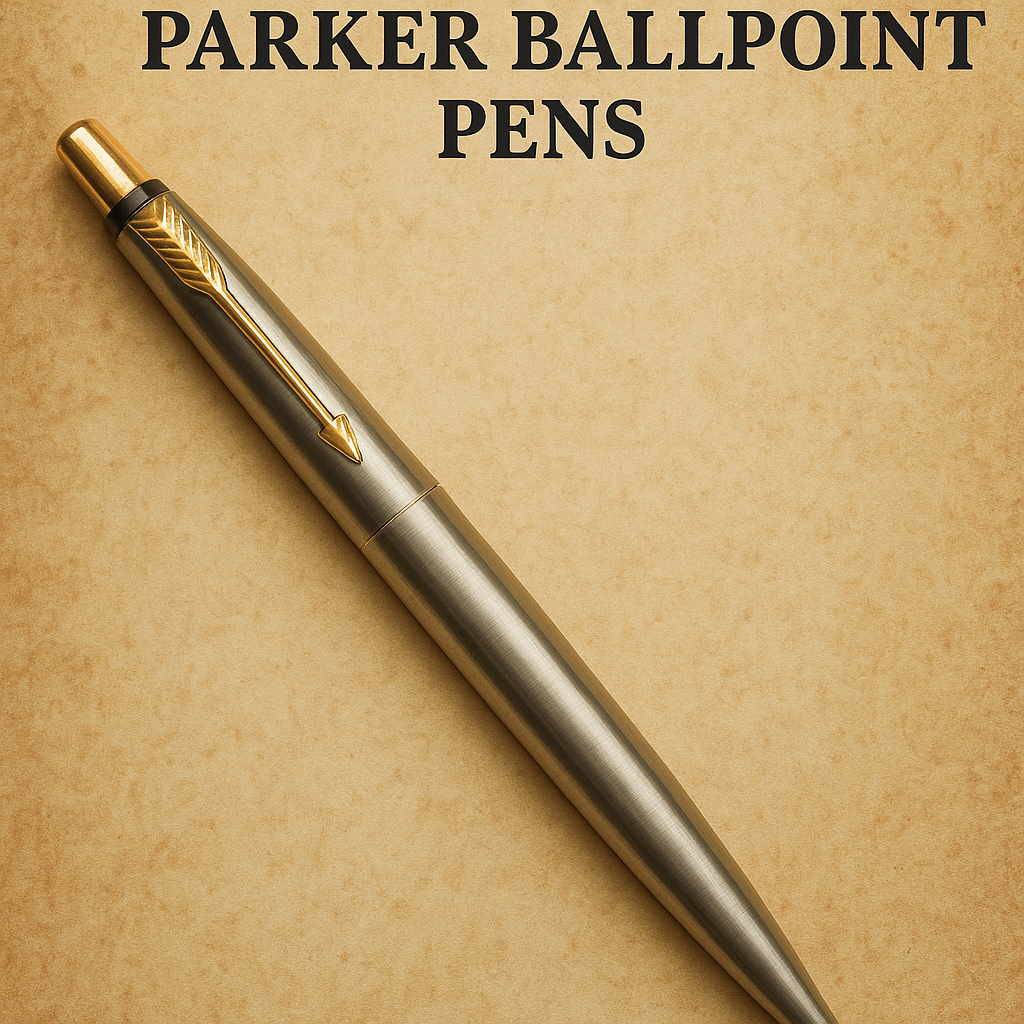
The Enduring Legacy of Parker Ballpoint Pens
In a world filled with fleeting digital notes and disposable writing tools, there stands one instrument that has withstood the test of time combining design, durability, and cultural significance unlike any other. With roots tracing back to over a century of innovation, the Parker name has become synonymous with quality writing experiences. Between its mechanical ingenuity and global influence, the Parker Ballpoint Pen earned its iconic status, bridging generations and preserving the tactile joy of pen and paper.
1. A Foundation of Innovation (1888–1930)
The story begins with George Safford Parker, who founded the company in 1888, guided by his belief that “It will always be possible to make a better pen”. In 1894, the Lucky Curve feed system revolutionized fountain pen reliability, preventing ink leakage through clever capillary action an innovation that defined Parker’s early reputation for craftsmanship In 1931, Parker introduced Quink ink fast-drying, low-blotting, and formulated after 1,021 experiments—ushering in a new era when fountain pens were at their peak These breakthroughs set the stage for future pen formats, but it wasn’t until the 1950s that Parker would make its hallmark move into the ballpoint market.
2. Transition to the Ballpoint Era: Jotter’s Arrival (1954)
In 1954, Parker unveiled the Jotter, its first mass-produced ballpoint pen model. It featured a retractable mechanism encased in stainless steel, replacing the common cap-and-cap system and embodying sleek, modern design The initial barrels, crafted from grooved nylon, came in varied colors like red, green, gray, and black laying the foundation of the Jotter’s timeless aesthetic
3. Technical Triumph: The T‑Ball Refill (1957)
Ballpoint pen technology rapidly improved by 1957 when Parker introduced the tungsten-carbide T‑Ball refill. Thanks to its textured surface, this tiny ball provided superior ink flow, removed skipping, and became the industry standard. This clever innovation, paired with robust construction and an iconic arrow clip, propelled the Jotter to immense popularity with over 750 million sold since launch
4. Design Elements That Last
The Jotter’s signature arrow clip added in 1958, following earlier clip styles became not just a functional component but a brand hallmark. Durability was demonstrated through several design milestones: stainless steel tops, a reliable click mechanism, and colorful but sturdy barrels.
Over the years, Parker released numerous versions—metal-bodied, XL-sized, premium London Underground-themed, and recyclable stainless-steel models while preserving the pen’s streamlined design and satisfying click
5. Global Reach and Enduring Popularity
The Jotter didn’t just resonate in its homeland it became a worldwide staple. Manufactured in Canada, England, France, India, China, Argentina, and beyond, it became a ubiquitous writing companion for students, professionals, and pen enthusiasts across continents Today, you’ll still find vintage models and new editions alike with collectors often hunting rare colors or early production examples.
6. Cultural Footprint
The Jotter transcended mere function and became a cultural icon:
It’s frequently spotted on-screen; its distinctive click and understated elegance make it a favorite in film and television sets. A Reddit user fondly recalled, > “I carry a stainless-steel Parker Jotter… absolutely my desert island pen” U.S. presidents like Kennedy favored it while dignitaries and professionals worldwide relied on its reliability for daily writing tasks. It’s also a favored promotional item compact, customizable, and distinctive.
7. Why Parker Still Resonates
Performance & Reliability: Built around the proven T‑Ball refill, the Jotter delivers smooth, consistent lines writing up to 28,000 linear feet per refill without skipping
Design Simplicity: Its minimalist yet iconic shape, arrow clip, and satisfying click mechanism convey functionality without flamboyance timeless design in its purest form.
Affordability & Sustainability: Priced affordably (~$6–$20), refillable, and in recent years offered with eco-friendly packaging, the Jotter remains accessible and modern.
Heritage & Collectability: With over 750 million sold, a rich history, and a collector’s market for rare editions, the Jotter stands as a pen that’s both everyday tool and piece of history.
Conclusion
In tracing Parker’s journey from George Parker’s early fountain pen experiments to the iconic Jotter the brand reveals a consistent philosophy: quality, innovation, and timeless design. The ballpoint revolution offered many newcomers, but Parker’s methodical approach the T‑Ball, arrow clip, retractable mechanism allowed it to lead rather than follow. Today, the Jotter continues as a symbol of reliable craftsmanship and understated elegance. Whether you’re signing a document or jotting a note, the click, balance, and smooth flow evoke decades of heritage. The legacy of Parker ballpoint pens, built on engineering breakthroughs, cultural presence, and design clarity, ensures they remain not just relevant but cherished writing companions for years to come.