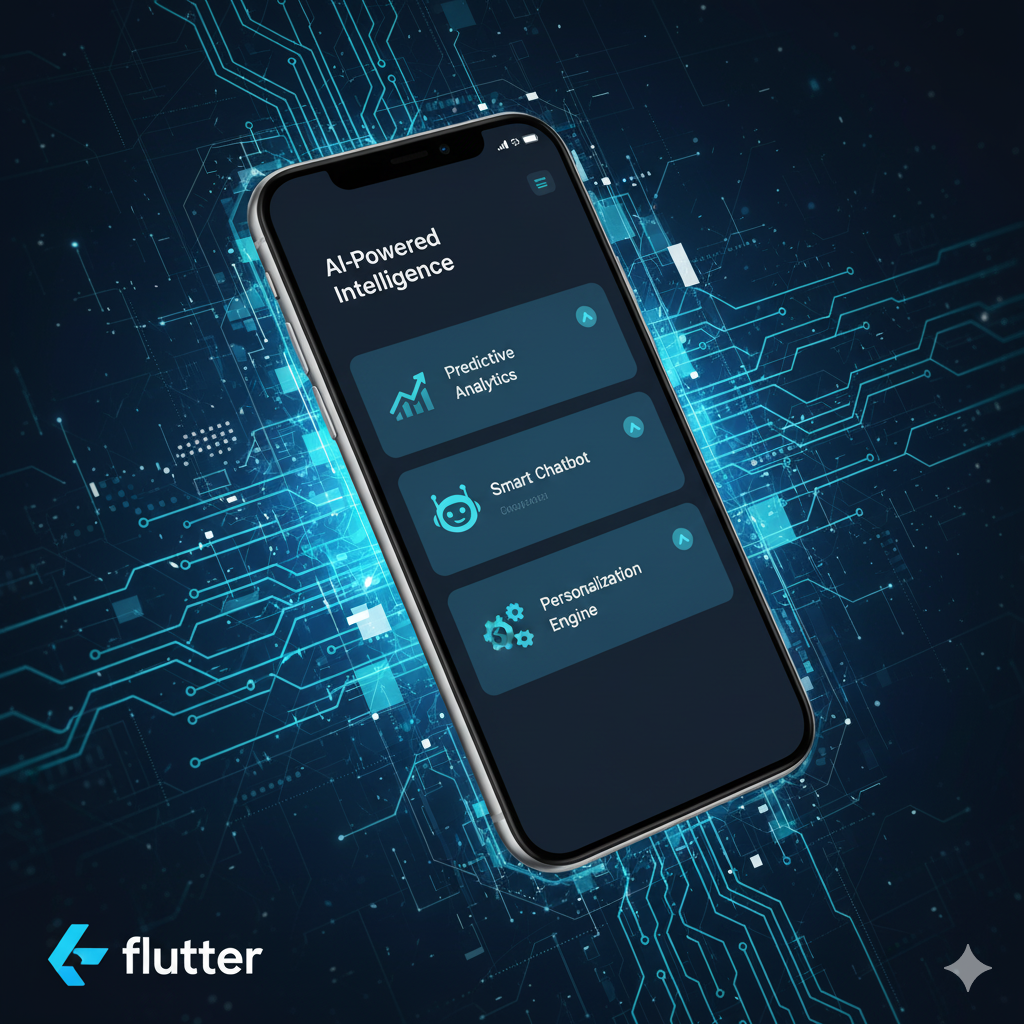
Why AI Integration Is the Future of Flutter App Development
In today’s digital-first world, businesses are under constant pressure to build apps that are faster, smarter, and more user-centric. Among the leading technologies driving this shift are Artificial Intelligence (AI) and Flutter. Flutter, Google’s cross-platform framework, has become a developer favorite for building apps across iOS, Android, and web with a single codebase. When combined with AI, it opens up a new era of intelligent, high-performing, and engaging applications.
But why exactly is AI integration the future of Flutter app development? Let’s break it down.
Understanding Flutter’s Popularity
Flutter has gained massive adoption due to:
- Single codebase: Build apps for multiple platforms simultaneously.
- Faster development cycles: Thanks to the hot reload feature.
- Rich UI/UX capabilities: Flutter’s widgets enable smooth, customizable interfaces.
- Scalability: It supports apps from startups to enterprises.
While Flutter ensures speed and efficiency, the growing need for intelligence and personalization in apps calls for AI integration.
The Role of AI in Modern Apps
AI empowers apps to:
- Analyze data and learn user behaviors
- Provide predictive recommendations
- Automate repetitive tasks
- Enhance security with smart authentication
- Deliver real-time insights
This means that AI doesn’t just add features—it transforms how users interact with applications.
1. Personalization at Scale
AI integration allows Flutter apps to deliver personalized experiences. For example:
- E-commerce apps can suggest products based on browsing history.
- Streaming apps can recommend movies or music tailored to user preferences.
- Fitness apps can create customized workout and diet plans.
Such personalization boosts user engagement, retention, and satisfaction.
2. Intelligent Chatbots and Virtual Assistants
AI-powered chatbots have become essential in customer service. When integrated into Flutter apps, they can:
- Offer 24/7 support to users.
- Automate bookings, inquiries, or payments.
- Provide conversational experiences with natural language processing (NLP).
This reduces operational costs while improving customer satisfaction.
3. Predictive Analytics for Smarter Decisions
AI enables Flutter apps to use predictive analytics by analyzing historical data. This benefits multiple industries:
- Finance apps can predict spending patterns and offer budgeting advice.
- Healthcare apps can monitor symptoms and suggest preventive measures.
- Retail apps can forecast inventory demand.
These insights empower businesses to make informed decisions while giving users more relevant services.
4. Voice and Image Recognition Features
AI brings advanced recognition features into Flutter apps:
- Voice assistants allow users to interact hands-free.
- Image recognition enables AR shopping or healthcare diagnostics.
- Facial recognition adds biometric security for logins.
These features not only enhance usability but also improve accessibility for diverse user groups.
5. Automation and Efficiency
AI integration automates time-consuming processes within apps. Examples include:
- Auto-filling forms
- Smart scheduling for meetings or deliveries
- Automated notifications at optimal times
Automation reduces manual effort, improving both user convenience and business efficiency.
6. AI for App Performance Optimization
Performance is critical for any mobile app. AI can monitor app performance in real time and:
- Detect potential crashes before they occur
- Optimize load balancing and resource usage
- Suggest performance improvements based on user interaction data
This ensures Flutter apps remain fast, stable, and scalable even as user bases grow.
7. Cross-Platform AI Advantage
One of Flutter’s biggest strengths is its cross-platform development capability. AI APIs and libraries like TensorFlow Lite, Google ML Kit, and Dialogflow can easily be integrated with Flutter. This means:
- Developers implement AI features once and deploy across platforms.
- Consistent AI-powered experiences on iOS, Android, and web.
- Faster time-to-market and reduced costs.
This combination makes Flutter and AI integration an unbeatable solution for businesses.
8. Enhanced Security with AI
Security is a growing concern, and AI integration strengthens Flutter apps by offering:
- Fraud detection algorithms for finance apps
- Behavioral biometrics to flag unusual activity
- Biometric authentication (fingerprint, facial recognition)
This level of protection reassures users while reducing risks for businesses.
9. Industry Applications of AI-Powered Flutter Apps
AI and Flutter are already transforming industries:
- Healthcare: Symptom checkers, remote monitoring, and AI-based diagnostics.
- E-commerce: Smart recommendations, inventory management, and customer insights.
- Real Estate: Property suggestions, virtual tours, and price predictions.
- Finance: Fraud detection, credit scoring, and financial planning tools.
These real-world examples show that AI-powered Flutter apps aren’t just futuristic—they’re happening now.
10. Future-Proofing Mobile Apps
The mobile app landscape is competitive, and user expectations keep rising. Flutter provides the speed and flexibility businesses need, while AI ensures apps remain intelligent, relevant, and future-ready.
As more organizations adopt smart solutions, AI integration will no longer be optional—it will become standard practice in Flutter app development.
Conclusion
The future of mobile apps lies at the intersection of speed, intelligence, and scalability. Flutter provides a robust framework for building fast, cross-platform apps, and AI adds the intelligence layer that makes them truly stand out.
From personalization and predictive analytics to automation and security, AI integration is the key to creating apps that engage users, streamline operations, and drive business growth.
For businesses in any industry, AI-powered Flutter apps are not just a competitive advantage—they are the future of digital success.
FAQs
Q1: Why is AI integration important for Flutter apps?
AI enhances Flutter apps with features like personalization, predictive analytics, automation, and improved security.
Q2: Which AI tools can be used with Flutter?
Popular options include TensorFlow Lite, Google ML Kit, and Dialogflow.
Q3: Does AI make Flutter apps more expensive to develop?
While AI adds some complexity, it reduces long-term costs through automation, efficiency, and higher user retention.
Q4: Can AI-powered Flutter apps work across platforms?
Yes. Flutter’s single codebase ensures AI features are deployed consistently on iOS, Android, and web.
Q5: What industries benefit most from AI-powered Flutter apps?
Industries like healthcare, finance, e-commerce, and real estate see the most value, but AI benefits almost every sector.