

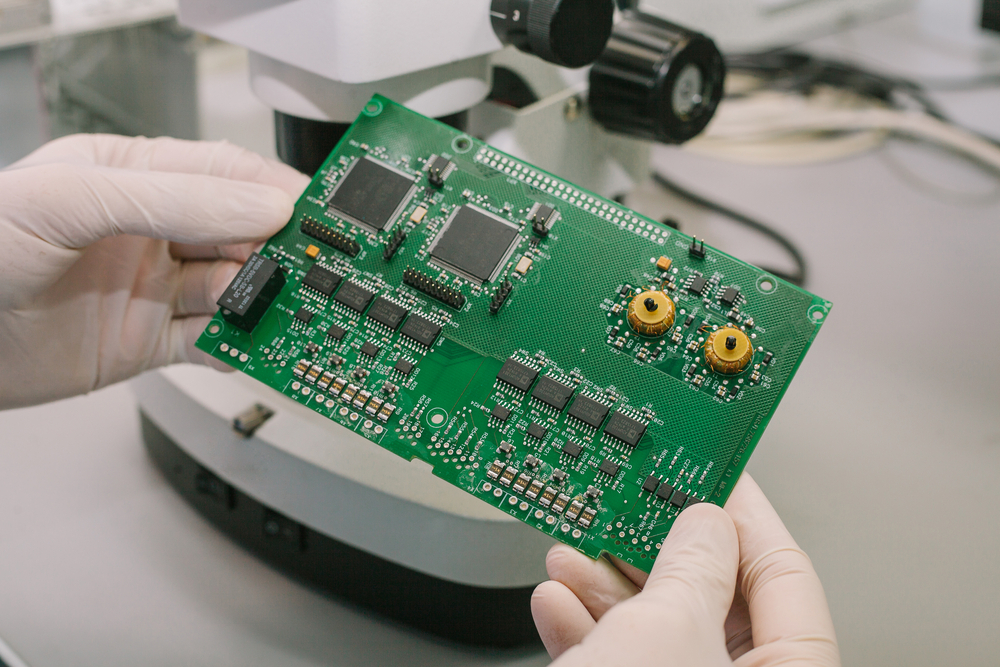
Why PCB Prototype Service is Essential for Multilayer PCB Manufacturing Success
Printed Circuit Boards (PCBs) are the backbone of any modern electronics, whether it is a smartphone or a laptop, a car, or an industrial system. These boards include the necessary electrical connections between components that allow devices to operate effectively. The prototyping of PCBs and multilayer PCBs has become central in the product development cycle owing to the rising demands that demand high-performance and compact devices. Prototyping enables engineers to test their designs before full production, whereas the ability to implement more complex and powerful electronic systems is possible on multilayer boards.
What is PCB Prototype Service?
A PCB prototype service can be described as producing a first-order version of a printed circuit board, which is utilized in testing and evaluation. Manufacturers use prototypes before use to determine potential flaws in design, performance, or manufacturing constraints before mass production takes place. Prototyping is efficient, money-saving, and it is a method of creating the final product of the desired specifications. The service is particularly useful to startups, research labs, and electronics companies on innovative projects where quality and precision are paramount.
Benefits of Prototype Service
The main advantage of prototype services is the ability to validate performance at the principles level. The ability to identify faults at the design, layout, or material selection level helps companies to remedy the situation without wasting any resources. Prototyping also shortens product development time by providing a rapid feedback loop. Moreover, it provides engineers with an opportunity to test multiple design variations and choose the most efficient one to make full-scale production. This makes sure that when the final product gets to the market, it is both reliable and cost-effective.
Understanding Multilayer PCB Manufacturing
With the improvement of technology, single-layer boards are not efficient anymore. The manufacturing of multilayer PCBs entails laying down several layers of conducting copper and non-conducting pads in order to produce compact and powerful boards. These boards are made using multiple layers to enable designers to add more components in a confined area to enhance performance without a larger device. Multilayer PCBs are used in smartphones, medical equipment, aerospace electronics, and high-speed communication systems, where advanced functionality is necessary.
The Connection Between PCB Prototyping and Multilayer Manufacturing
The connection between PCB prototype service and multilayer PCB fabrication is essential. Prototyping can also assist in assuring that the design is best suited to multilayer manufacture by testing signal paths, thermal management, and layer registration. Without prototyping, there is a high likelihood of making costly mistakes during bulk multi-layer manufacture. An example is the multilayered PCBs, which can be more expensive and challenging to repair errors committed. This makes the combination of rapid prototyping and sophisticated manufacturing methods lead to increased quality and reliability of final products.
Challenges in PCB Prototype and Multilayer Production
Although both prototyping and multilayer production have their advantages, there are also challenges. Prototyping can be done at high speeds, which can at times be unfair to the cost. In multilayer boards, precision in alignment, heat sinking and complexity are challenging. Moreover, in smaller devices, the size reduces and performance within those dimensions is difficult to maintain at high levels. These problems need competent engineering, sophisticated equipment, and creative designs.
Future Trends in PCB Prototyping and Multilayer Manufacturing
The future of prototype service and multilayer PCB manufacturing is very optimistic, due to the improved technology. Automation and AI-driven design software are accelerating the prototyping process, and flexible and rigid-flex multilayer substrates are on the rise. The industry is also being influenced by the need to use eco-friendly materials and sustainable processes. Also, due to IoT, 5G, and electric vehicles, complex multilayer boards will become even more common, and this makes prototyping even more important to the design process.
Conclusion
In the current competitive world of electronics, PCB prototype services and multilayer PCB production are crucial to guarantee the reliability and performance of devices. Prototyping saves time and decreases risk in product development, whereas the multilayer manufacturing technology allows advanced functional capabilities in a miniature form. The combination of the two creates the infrastructure of innovation and innovation in many sectors, including consumer electronics and aerospace. Finding a stable partner in these services will allow accuracy, cost-effectiveness, and long-term success. LYRTION offers quality and reliable products in terms of prototyping and manufacturing of multilayer PCBs with accomplished projects globally.
FAQs
Q1. Why is the prototype service essential before LMG?
PCB prototyping can locate flaws in design and provide certainty in functionality without spending resources on large-scale manufacturing. This reduces time and cost.
Q2. Which industries does multilayer PCB manufacturing help most?
Multilayer boards are widely used in industries like telecommunication, medical devices, aerospace, defense, and consumer electronics sectors because of their compactness and performance.
Q3. How many Layers can a multilayer PCB be built with Q?
The number of layers of PCBs may vary between 4 and over 50, depending upon the complexity of the application and device requirements.

Lyrtion
At Lyrtion, we make PCB manufacturing easy and reliable. From sourcing parts to assembling your board, we handle it all—quickly, affordably, and with care. Whether you're building a prototype or scaling up, we’re here to support you with flexible, high-quality PCBA services. Let’s bring your ideas to life—faster and smarter, together!