

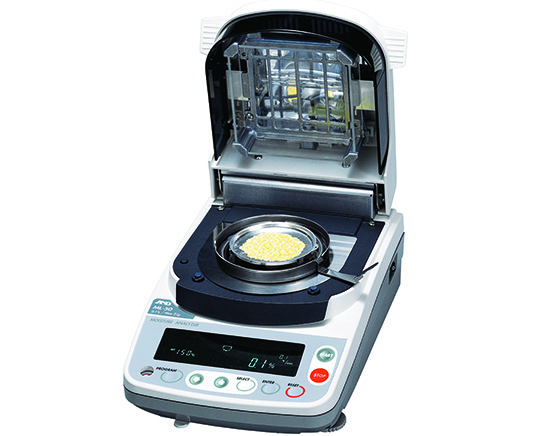
Top 5 Industries that Benefit from Moisture Balance
In many industries, product quality and consistency depend on the ability to accurately measure and control moisture content. Too much or too little moisture can impact everything from shelf life to performance, safety, and compliance with regulations. This is where a moisture balance—a highly precise instrument that measures the moisture level in various materials—becomes indispensable.
Moisture balances combine the principles of a drying oven with analytical weighing, providing fast, reliable, and accurate results. Their application extends across multiple sectors where moisture plays a critical role in the final outcome of products.
Top Five Industries that Benefit from Moisture Balance Technology:
1. Food and Beverage Industry
The food industry is perhaps the most obvious and vital user of moisture balances. Moisture content is a crucial factor that directly influences taste, texture, shelf life, and safety of food products. Too much moisture can encourage microbial growth and spoilage, while too little can affect flavor, weight, and consumer satisfaction.
Key applications:
- Baked goods: Bread, biscuits, and crackers require strict moisture control to avoid staleness or mold growth.
- Dairy products: Cheese and milk powder are tested to maintain consistent quality.
- Meat and seafood: Moisture balance ensures proper drying, curing, and packaging.
- Beverages: Powdered drink mixes rely on precise moisture measurements for solubility and longevity.
By using moisture balances, food manufacturers can maintain regulatory compliance with bodies such as FSANZ (Food Standards Australia New Zealand) or the FDA, while also ensuring product consistency that builds consumer trust.
2. Pharmaceutical Industry
In pharmaceuticals, precision is everything. Even slight variations in the moisture content of tablets, capsules, or powders can compromise the stability, efficacy, and safety of medications. Moisture balances are widely used in laboratories and production facilities to guarantee that products meet stringent quality standards.
Key applications:
- Tablets and capsules: Moisture content affects disintegration time and absorption rates in the body.
- Powder formulations: Hygroscopic powders must be monitored to avoid clumping or degradation.
- Active pharmaceutical ingredients (APIs): Accurate moisture levels are critical to maintaining potency.
- Packaging materials: Moisture testing ensures that blister packs or container materials provide proper protection.
Moisture analysis also plays a role in Good Manufacturing Practice (GMP) compliance, as regulatory agencies require pharmaceutical companies to demonstrate that their products are both safe and effective. With the help of moisture balances, pharmaceutical manufacturers can achieve the precision necessary to protect patient health.
3. Agriculture and Animal Feed
Agriculture, another moisture-sensitive industry, relies heavily on accurate measurement to protect crops and livestock. Improper moisture levels in crops or feed can result in reduced nutritional value, mold growth, or even toxins like aflatoxins that pose a danger to both animals and humans.
Key applications:
- Grains and cereals: Moisture levels determine storage stability. Excess moisture can cause spoilage during storage and transport.
- Animal feed: Balanced moisture ensures nutritional quality and prevents microbial contamination.
- Seeds: Moisture plays a role in germination rates and storage longevity.
- Forage and silage: Moisture testing ensures proper fermentation and nutrient preservation.
In the agricultural sector, moisture balances help farmers and feed manufacturers avoid economic losses by ensuring products are safe, stable, and market-ready. For a global industry that sustains both people and animals, moisture control is indispensable.
4. Chemical Industry
Chemicals, whether in raw, intermediate, or final form, often need precise moisture control to ensure stability, reactivity, and usability. Inaccurate moisture content can cause reactions to fail, reduce shelf life, or affect safety during transport and use.
Key applications:
- Polymers and plastics: Moisture in raw materials can cause defects during molding or extrusion.
- Fertilizers: Excess moisture can cause clumping, reduced solubility, and reduced effectiveness.
- Powdered chemicals: Moisture balances help maintain consistent particle properties.
- Adhesives and coatings: Controlling moisture ensures proper bonding and finishing quality.
In industrial chemical production, moisture balance devices allow for quick, repeatable testing that supports both process efficiency and regulatory compliance. They are particularly valuable in R&D labs where product formulations must be tested extensively before large-scale production.
5. Paper, Pulp, and Textile Industry
Moisture content is a critical quality factor in industries that deal with fibrous materials like paper, pulp, and textiles. Both under-drying and over-drying can result in quality and performance issues, making precise measurement essential.
Key applications:
- Paper and pulp: Moisture affects printability, thickness, strength, and curl resistance.
- Textiles and fabrics: Moisture content influences weight, feel, dye absorption, and shrinkage.
- Packaging materials: Corrugated boxes and paperboard require controlled moisture levels to retain strength.
Moisture balances are used at multiple stages of production to ensure consistency and avoid costly quality issues. In the textile industry, for example, the ability to control moisture directly impacts customer satisfaction and product durability.
Why Moisture Balance Matters Across Industries
Across all these industries, the common benefits of using a moisture balance include:
- Accuracy and reliability: Provides precise results in minutes.
- Process efficiency: Enables quick quality checks during production runs.
- Cost savings: Prevents product recalls, waste, and spoilage.
- Compliance: Helps companies meet international standards and certifications.
- Product quality: Ensures consistency, safety, and customer satisfaction.
Modern moisture balances also come with features such as touchscreen displays, data connectivity, and programmable drying methods, making them even more versatile for industrial and laboratory settings.
Conclusion
From ensuring the crispness of a cracker to preserving the potency of a lifesaving drug, moisture balances play a vital role in multiple industries. The food and beverage, pharmaceutical, agriculture, chemical, and paper/textile sectors all rely on precise moisture measurement to safeguard quality, safety, and efficiency.
As industries continue to modernize and regulations tighten, the demand for fast, reliable, and accurate moisture analysis will only grow. For businesses, investing in a high-quality moisture balance isn’t just about compliance—it’s about building trust, reducing losses, and ensuring long-term success.