

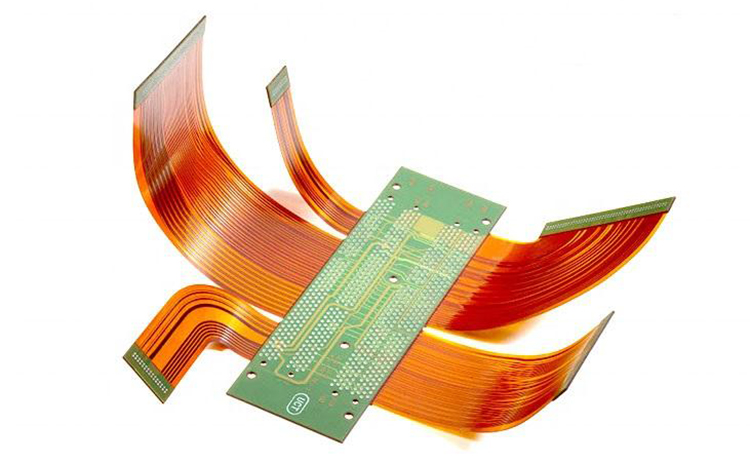
From Rigid to Flexible: Advancing PCB Fabrication for Next-Gen Devices
With the constant evolution of electronics associated with smaller and lighter PCBs as well as durable PCBs, the use of Flexible Printed Circuit Boards (FPCBs) and Double-sided PCBs has become very vital in today’s manufacturing design of circuits. Be it smartphones or satellites, these PCB technologies provide exclusive benefits incompatible with the traditional rigid boards. This post explores the fabrication techniques, benefits, issues, and uses of Flexible PCB Fabrication as well as Double-Sided PCBs, and why the two components are essential components in sophisticated electronic production.
The Flexible PCBs: A New Realm in Circuit Design
Flexible PCB Fabrication uses flexible plastic, like polyimide or polyester substrates, to enable the circuit to be bent, folded, and twisted without losing function. In comparison to rigid PCBs, flex PCBs are flexible and can adapt to dynamic mechanical features, hence suited to space-limited and mobile applications as compared to rigid PCBs, which are restricted to planar applications.
Manufacture of flexible PCB is also by photolithographic imaging, etching, and plating, like the rigid boards, but with large differences in the materials and process control. It is all about the base material, which is usually polyimide and presents thermal stability as well as mechanical flexibility. UV curing is used along with the most advanced lamination processes to attach various layers of fiberglass, frequently supported by the use of stiffeners in specific areas in order to bear the connectors or components.
Benefits of Flexible PCB Manufacturing
Flexible PCB Fabrication allows wearable devices, medical implants, and aerospace parts to be made in massively compact designs because they do not require bulky wiring.
- Dynamic Flexibility: The boards have many applications where the board is in motion or vibrating like a robotic arm, a hinge display, etc.
- Better reliability: There are few solder joints and interconnects, which means that the probability of failure of the system is much less than that of traditional wire harnesses.
- Low Cost in Assembly: The resultant time savings in assemblies and space savings make it cheaper overall, though the cost per unit is higher.
Flexible PCB Manufacturing Challenges
In spite of the advantages, the Flexible PCB Fabrication is very difficult to design and create. The manufacturers have to consider:
- Clockwise, material deformation causes shorter tolerances of etching.
- Poor reworkability since flex materials do not tolerate heat as much.
- Layer registration problems with lamination.
- High-power applications are of interest in moisture absorption and thermal management.
The Workhorse of Modern Electronics: Double-Sided PCBs
Combined with copper traces on the front and rear sides of the boards, the PCBs allow more routing density and more complex structure than single-layer PCBs. They support industries that need medium complexity and the advantage is that it is not costly to use like multi-layer PCB.
Copper-clad laminates are used, with the plated-through holes (PTH) being drilled to inter-connect the top and bottom layers. Solderability of the components is applied using surface treatments such as HASL, ENIG, or OSP, and assembly is guided using small silkscreens.
The Advantages of Using Double Sided PCBs.
- Density: With two sides, you can fit more components in the same area.
- Cost-Effective Complexity: Provides a compromise between one-layer simplicity capabilities and many layers.
- Manufacturability: It is cheaper and quicker to make as compared to multilayer PCBs.
- Prototyping Friendly: This is commonly used in preliminary construction and mid-range production.
Innovation in Flexible PCB Manufacturing Material
The base materials represent one of the most important elements of the flexible PCB performance. Historically, the preferred substrate was polyimide (PI) because it exhibits great thermal stability, chemical resistance, and mechanical strength. New materials, however, such as liquid crystal polymer (LCP) and thermoplastic polyimide (TPI), have recently been introduced and can compete with PET better when it comes to more attractive moisture absorption, dielectric behavior, and even stronger mechanical performance.
Coated copper films, as well as flexible laminates that contain ground planes embedded into them, are also being used by manufacturers in shielding and EMI protection. Such are used to preserve signal integrity during transmission of data at high speeds, especially in 5G modules, antenna arrays, and radio frequency sensors.
Looking Ahead: Rigid-Flex and HDI Integration
Future-ready products are moving toward HDI (High-Density Interconnect) and rigid-flex hybrid boards. These use laser-drilled microvias, fine-pitch BGA support, and sequential lamination to pack high performance in minimal space.
We’re developing next-gen solutions with 3D-shaped circuits, EMI shielding, and additive manufacturing techniques, helping clients lead in innovation.
Final Thoughts
Flexible and double-sided PCB are not competing technologies—they’re complementary. Flexible PCBs bring mechanical adaptability, while double-sided PCBs offer a smart balance of cost and capability.
At LYRTION, we go beyond standard fabrication to deliver tailored PCB solutions with expert material selection, quick prototyping, and proven durability. Whether you’re building the next wearable medical device or scaling your smart home innovation, we help ensure your electronics perform with precision and reliability.

Lyrtion
At Lyrtion, we make PCB manufacturing easy and reliable. From sourcing parts to assembling your board, we handle it all—quickly, affordably, and with care. Whether you're building a prototype or scaling up, we’re here to support you with flexible, high-quality PCBA services. Let’s bring your ideas to life—faster and smarter, together!