

The Impact of Lean Six Sigma in BPO
In today’s fast-paced business landscape, Business Process Outsourcing (BPO) companies face the pressure to deliver faster, smarter, and more efficiently. One proven way to meet these expectations is by applying Lean Six Sigma in BPO environments. But what exactly does this mean? How does it benefit service delivery, and where might its limitations lie?
Let’s explore the real impact of Lean Six Sigma in BPO — in a simple, practical, and humanized way.
What is Lean Six Sigma, and Why Does It Matter in BPO?
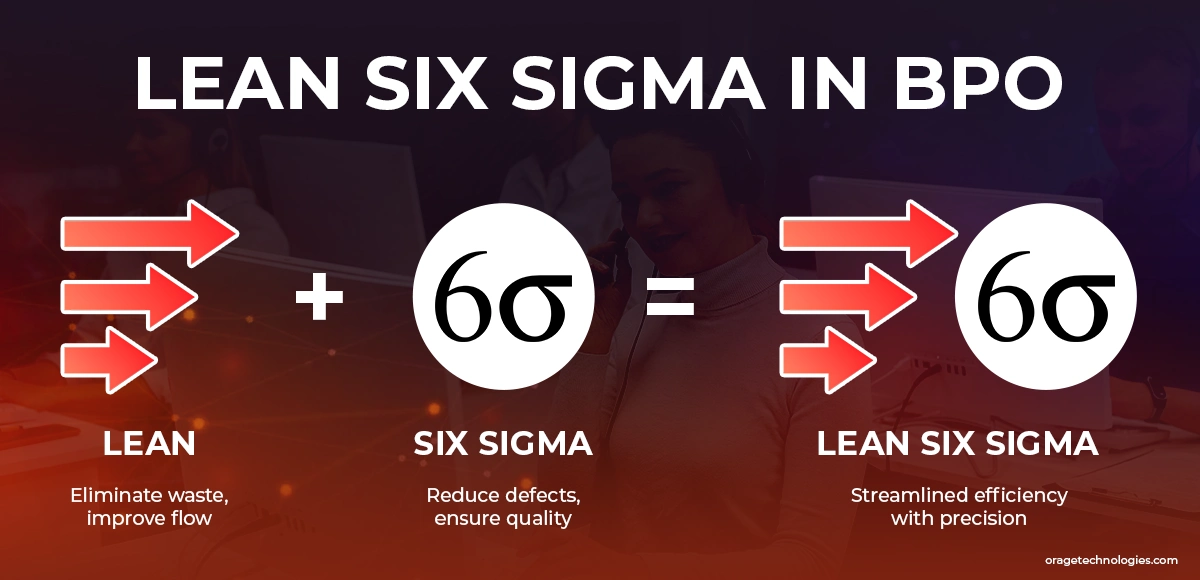
Lean Six Sigma is a combination of two powerful process improvement methodologies: Lean, which focuses on reducing waste, and Six Sigma, which emphasizes minimizing variation and defects. Together, they help companies run leaner and smarter.
In the BPO world, where repetitive tasks and high volumes are common, this methodology fits like a glove. It helps teams streamline workflows, reduce errors, and enhance customer satisfaction. Implementing Six Sigma in BPO empowers providers to deliver consistently high-quality services, which is essential in a competitive outsourcing market.
How Does Lean Six Sigma Work in a BPO Environment?
The application of Lean Six Sigma in BPO typically follows the DMAIC framework:
- Define: Identify the problem or opportunity.
- Measure: Collect relevant data to understand current performance.
- Analyze: Find the root cause of inefficiencies.
- Improve: Develop and implement solutions.
- Control: Sustain improvements with proper controls and monitoring.
Let’s take an example: Imagine a BPO team handling insurance claims that is experiencing frequent data entry errors. Using Lean Six Sigma, the team can analyze error trends, identify weak spots in the process, and implement fixes that reduce mistakes, ultimately saving time and improving client satisfaction.
What Are the Benefits of Using Six Sigma in BPO?
There are several advantages to implementing Six Sigma in BPO operations. Let’s break down the key benefits:
1. Improved Accuracy and Reduced Errors
With data-driven decision-making, Six Sigma reduces process flaws. This is particularly useful for data-intensive tasks such as billing, account reconciliation, or claims processing.
2. Increased Productivity
By eliminating non-value-adding activities, employees can focus on tasks that directly contribute to client satisfaction and company growth.
3. Higher Customer Satisfaction
Fewer errors and faster turnarounds lead to happier clients — which is essential in the competitive BPO industry.
4. Better Employee Engagement
Six Sigma projects often involve frontline employees in process improvements. This inclusion boosts morale and gives team members a sense of ownership.
5. Scalable Process Improvements
Once a process is optimized, it can be replicated across teams, geographies, or clients — making it easier to grow your BPO business.
Are There Any Limitations to Using Six Sigma in BPO?
While the advantages are substantial, Six Sigma in BPO is not without its challenges.
1. Initial Learning Curve
It requires trained professionals (Green Belts, Black Belts) to lead the process. Training and certification can be costly and time-consuming.
2. Resistance to Change
Some teams may be hesitant to change long-standing workflows, especially when they don’t fully understand the benefits.
3. Data Dependency
Six Sigma thrives on data. If your BPO operation lacks robust data tracking, results may be skewed or delayed.
4. Not Ideal for Every Process
Lean Six Sigma works best in mature, repetitive processes. For creative or client-facing tasks, it might not offer as much value.
Despite these challenges, with the right approach and leadership buy-in, the benefits often far outweigh the limitations.
How Can a BPO Company Start Implementing Six Sigma?
If you’re considering adopting Six Sigma in BPO, here’s a simple roadmap:
- Identify a process with frequent issues (high error rates, delays, or customer complaints).
- Train key team members or hire a Six Sigma consultant.
- Start small — run a pilot project in one department.
- Use DMAIC to guide your process improvement journey.
- Scale successful projects to other departments or clients.
- Build a continuous improvement culture within the company.
Remember, even small wins can build momentum.
How Has Six Sigma in BPO Helped Real Companies?
Many global BPO companies use Lean Six Sigma to transform service delivery. Here are a few real-world impacts:
- A global BPO firm reduced invoice processing errors by 65% after implementing Six Sigma improvements in its finance department.
- An insurance BPO provider used DMAIC to streamline claims handling, reducing average resolution time from 5 days to 2 days.
- A call center operation improved first-call resolution by 25%, resulting in better customer retention and reduced costs.
These outcomes prove that Six Sigma in BPO is not just a theory — it delivers measurable value.
Is Six Sigma in BPO Worth the Investment?
Yes — when implemented correctly. It’s important to approach Lean Six Sigma as a long-term commitment, not a one-off project. Companies that truly embed Six Sigma into their culture experience ongoing performance improvements, stronger client relationships, and improved profitability.
If you’re aiming to stand out in the BPO industry, Lean Six Sigma can be your differentiator.
Frequently Asked Questions (FAQ)
Q1: Is Six Sigma only for manufacturing?
Not at all. While Six Sigma originated in manufacturing, it’s now widely used in services like healthcare, finance, and BPO to reduce errors and improve processes.
Q2: Do I need certified experts to start Six Sigma?
Having Green Belts or Black Belts helps, but you can start small with basic training and guidance from experienced consultants.
Q3: How long does a Six Sigma project take?
Most projects take 3–6 months, depending on the scope and complexity.
Q4: What types of BPO processes benefit the most?
Repetitive, rule-based processes such as data entry, payroll, billing, and customer support typically see the greatest improvements.
Q5: Can Six Sigma improve customer satisfaction?
Absolutely. Reducing errors and improving consistency leads to faster service and happier clients.
Final Thoughts
In the ever-changing world of outsourcing, operational excellence is key. Six Sigma in BPO gives companies a powerful toolkit to reduce costs, boost quality, and build a culture of continuous improvement. While the journey may require time and resources, the long-term impact can be transformative.
If you’re a BPO provider looking to enhance your service delivery and client relationships, it’s time to give Lean Six Sigma a closer look.