

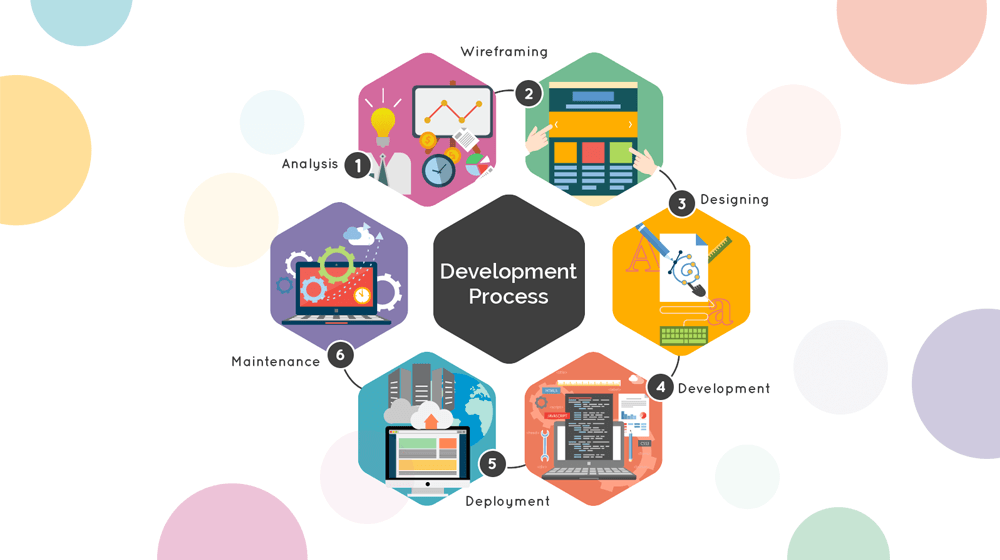
The Essential Stages of the Mobile App Development Lifecycle: A Roadmap to Success
In today’s digitally driven world, mobile applications have become indispensable tools for businesses, consumers, and innovators alike. Creating a successful app, however, is far more complex than simply writing code.
It demands a structured, methodical approach known as the Mobile App Development Lifecycle (MADLC). This comprehensive process transforms a raw idea into a polished, market-ready product while minimizing risks and maximizing value.
Understanding and meticulously executing each stage is crucial for any software development company aiming to deliver high-quality, user-centric applications.
Let’s explore the three fundamental stages that form the backbone of this lifecycle.
Stage 1: Strategy, Planning, and Design – Laying the Unshakeable Foundation
The journey begins long before a single line of code is written. This initial phase is arguably the most critical, as it defines the app’s purpose, viability, and blueprint for success. Rushing through this stage often leads to costly rework, misaligned expectations, or even complete product failure.
Market Research and Conceptualization: It starts with validating the core idea. Who is the target audience? What specific problem does the app solve? A thorough competitive analysis identifies existing solutions, market gaps, and opportunities for differentiation.
This research shapes the app’s unique value proposition (UVP) – the compelling reason users will choose it over alternatives. Defining clear, measurable objectives (e.g., increase user engagement by 40%, acquire 10,000 users in 3 months) is essential for guiding development and measuring success post-launch.
Requirements Gathering and Scope Definition: Translating the vision into actionable specifications comes next. This involves detailed discussions with stakeholders to document functional requirements (what the app does – e.g., user login, payment processing, push notifications) and non-functional requirements (how the app performs – e.g., security standards, load capacity, offline functionality).
Crucially, this phase establishes the Minimum Viable Product (MVP) scope. The MVP focuses on delivering the core features necessary to satisfy early adopters and gather validated learning with minimal resources, allowing for faster market entry and feedback-driven iteration.
Must Read: Will Google’s new AI tools reprogramme marketing?
Technical Architecture and Stack Selection: Architects and technical leads define the app’s backbone. Will it be native (iOS Swift/Kotlin for Android), cross-platform (React Native, Flutter), or hybrid? Decisions about the backend infrastructure (cloud providers like AWS, Azure, or GCP), databases, APIs, and third-party integrations are made.
This blueprint ensures Scalability – the system’s ability to handle growing users and data without performance degradation – and security from the ground up. Choosing the right technology stack impacts development speed, future maintenance costs, and overall app performance.
User Experience (UX) and User Interface (UI) Design: This is where the app’s soul takes shape. UX designers map the user’s journey through the app via user flows and wireframes, focusing on intuitive navigation, logical task completion, and minimizing friction.
User Experience (UX) is paramount – it’s about how the user feels while interacting with the app. UI designers then breathe visual life into these structures, creating mockups and prototypes with brand-aligned colors, typography, icons, and interactive elements.
High-fidelity prototypes allow for early usability testing, identifying pain points before development begins. Iterative design, heavily influenced by Agile Methodology, ensures constant refinement based on stakeholder and potential user feedback. The outcome is a comprehensive design system and specifications that developers can precisely follow.
Stage 2: Development and Rigorous Testing – Building and Polishing the Product
With a solid blueprint in hand, the focus shifts to construction and quality assurance. This phase transforms designs and specifications into a functional, reliable application through systematic coding and exhaustive testing.
Development Sprint Cycles: Modern development, especially within a proficient software development company, typically follows Agile Methodology. Work is broken down into short, time-boxed iterations and sprints (usually 1-4 weeks). Developers tackle prioritized features from the backlog during each sprint. Frontend developers implement the UI/UX designs, ensuring pixel-perfect layouts and smooth interactions.
Backend developers build the server logic, APIs, database structures, and integrations. DevOps engineers establish continuous integration/continuous deployment (CI/CD) pipelines, automating builds, testing, and deployment processes for efficiency and consistency. Daily stand-up meetings, sprint planning, and retrospectives foster collaboration and rapid adaptation to changing requirements or feedback.
Comprehensive Quality Assurance (QA) and Testing: Testing is not a single phase at the end; it’s an integral, ongoing activity woven throughout development. Quality Assurance services employ a multi-layered strategy. Unit Testing verifies the smallest code components work in isolation.
Integration Testing ensures different modules or services communicate correctly. Functional Testing checks if features behave according to specifications. Usability Testing assesses how real users interact with the app, identifying confusing interfaces or workflows. Performance Testing evaluates speed, responsiveness, and stability under load (e.g., thousands of concurrent users). Security Testing probes for vulnerabilities like data leaks or injection attacks.
Compatibility Testing ensures the app works seamlessly across various target devices, screen sizes, and OS versions. Automated testing tools are heavily utilized for regression testing (ensuring new code doesn’t break existing functionality), while manual testing explores complex user scenarios and edge cases. Rigorous Quality Assurance (QA) is non-negotiable for delivering a stable, secure, and user-friendly product.
Beta Testing and Refinement: Before a full public launch, a controlled Beta release is invaluable. Inviting a group of real-world users (often from the target audience) to test the app in their natural environment provides critical insights.
Feedback on bugs, usability issues, performance on diverse networks, and overall satisfaction is gathered. This feedback loop allows developers to squash elusive bugs, fine-tune performance, and make final UX adjustments based on authentic user behavior, significantly enhancing the launch version’s quality and user reception.
Stage 3: Deployment, Launch, and Sustained Maintenance – Launching and Evolving
Releasing the app on stores is a major milestone, but it’s far from the finish line. This stage focuses on successful launch execution, user acquisition, and the ongoing evolution essential for long-term relevance and success.
App Store Optimization (ASO) and Launch Preparation: Visibility is key in crowded app stores. ASO involves strategically optimizing the app’s listing – title, keywords, description, screenshots, and preview videos – to improve its ranking in search results and attract organic downloads. Compelling creatives that clearly communicate the app’s value are vital.
Simultaneously, developers prepare the final production build, ensuring all store guidelines (Apple App Store Review Guidelines, Google Play Policies) are meticulously met regarding content, security, privacy (like GDPR/CCPA compliance), and technical requirements. Metadata, age ratings, and privacy nutrition labels are finalized. A well-coordinated launch marketing plan (PR, social media, influencer outreach, paid ads) generates anticipation and drives initial downloads.
Deployment, Monitoring, and User Acquisition: The app is formally submitted to the app stores for review. This process can take days (Google Play) to weeks (Apple App Store), requiring patience and readiness to address any review feedback promptly. Upon approval, the app goes live! Immediately, robust monitoring tools track key performance indicators (KPIs): downloads, active users, retention rates, session length, crash reports, and in-app conversion metrics.
Real-time monitoring of server health, API performance, and error rates is crucial for rapid incident response. Marketing efforts shift towards sustained user acquisition and engagement through channels like SEO, content marketing, social media campaigns, and referral programs. Analyzing user behavior (via analytics platforms like Firebase, Mixpanel) provides deep insights into feature usage and drop-off points.
Must Read: Fantasy cricket app development Guide for businesses 2025
Continuous Maintenance, Updates, and Growth: Mobile technology is dynamic. Operating systems update, new device models emerge, user expectations evolve, and competitors innovate. Maintenance is therefore perpetual and critical.
This includes promptly fixing bugs reported by users, addressing performance bottlenecks identified through monitoring, and patching newly discovered security vulnerabilities. Beyond fixes, regular feature updates are essential.
These add new functionality, enhance existing features based on user feedback and analytics, and keep the app competitive. Scalability considerations from Stage 1 become operational here; the backend must efficiently handle organic user growth. Furthermore, the app must be updated promptly to remain compatible with the latest OS versions (iOS, Android) to prevent crashes or malfunctions for users on newer devices. This continuous improvement cycle, fueled by user data and market trends, transforms the app from a static product into a living, evolving platform that retains users and drives sustained business value.
Conclusion: A Cycle of Continuous Innovation
The Mobile App Development Lifecycle is not a rigid, linear path but rather an iterative, interconnected cycle. Insights gained during maintenance and user feedback often loop directly back into the strategy and planning phase for the next major version or feature set. Each stage – the meticulous foundation-building of Planning and Design, the disciplined construction and validation of Development and Testing, and the dynamic growth management of Deployment and Maintenance – is indispensable.
For a software development company, mastering this lifecycle, emphasizing User Experience (UX), rigorous Quality Assurance (QA), and building for Scalability, is fundamental to delivering successful mobile applications that not only function flawlessly but also captivate users and thrive in the competitive marketplace.
By respecting each phase and fostering collaboration between strategists, designers, developers, testers, and marketers, organizations can navigate the complexities of app creation and turn visionary ideas into impactful digital realities.
