

What Common Mistakes Should You Avoid in Real Estate Investing?

Are you taking your first step into the real estate world?
Real estate investing is considered a reliable path and a great opportunity to build wealth. In terms of ROI, it is one of the safest options and an excellent way for your financial security.
Property investment helps in building wealth by providing excellent returns, cash flow, diversification, tax advantages, and significant returns over time. However, like other endeavors, this profitable venture does not come without challenges.
Selling and buying properties in Pennsylvania can indeed make money, but it requires a focused plan, skills, knowledge, and determination. Therefore first-time buyers and seasoned investors need to understand some of the common real estate investing mistakes to reduce their financial losses.
Let’s skim through the 5 common mistakes to avoid:
1. Insufficient Market Research
It is understandable that individuals often get excited about their first investment, however, you need to be cautious. Stepping into the market without precise research is one of the most common mistakes made by investors. It is vital to understand property values, local market conditions, and rental rates for a favorable outcome. Proper research includes the following:
- To gain insights into historical data on a community or property it is essential to research market trends precisely. This will provide you with a better understanding of cash flow on property values and rental prices which keep changing over time.
- Analyze the neighborhood to comprehend schools, economic stability, and crime rates in the area.
- Economic indicators like population trends and job growth also affect the demand for property.
It is important to do proper market research so you do not end up buying a property in a declining area or paying more than it is worth.
2. Overleveraging
Overleveraging occurs when you borrow excessively. This will make you vulnerable to the market changes while increasing your debt burden. Here are some of the ways to avoid this:
- Make sure your debt is low enough so that your monthly payments are easy to handle with your income.
- To cover unexpected expenses, build emergency funds by having reserves aside.
Using leverage wisely means finding a balance between the chance to make more money and the risk of taking on more debt.
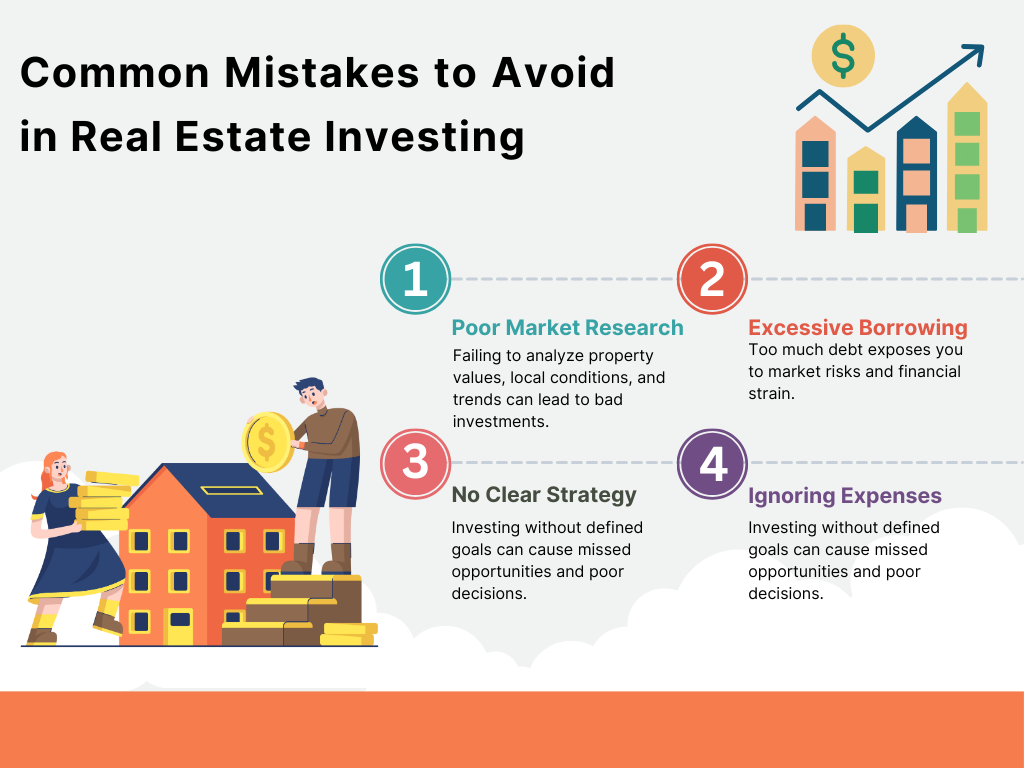
3. Lacking Long-Term Strategies
It is crucial to outline a plan and set specific goals before investing in a property. Failing to create a plan can lead to missed opportunities and impulsive decisions. There are many ways to invest in real estate, and your strategy will depend on your objectives. Though this isn’t a complete list, here are some important questions to think about:
- Do I desire to own real estate myself like a physical property or invest indirectly, i.e. mutual funds, real estate investment trusts (REITs), or exchange-traded funds (ETFs)?
- Do I want to buy and hold the property or immediately sell my house in Pennsylvania?
- How much can I invest in a property, including potential renovations, purchase price, and closing costs?
- What property type do I need, i.e. a multi-unit building, single-family home, condominium, etc?
- What is the expected cash flow potential or ROI (Return on investment)?
A long-term plan gives you a clear guide for making decisions and helps you match your actions and resources with the results you want.
4. Underestimating Expenses
While owning a property new investors usually overlook the significant expenses associated with it. They get excited and focus solely on the buying price of the property. In any property investment remember to include the following costs in your calculations:
- The repairs and maintenance to the property could be expensive. Costs can rise fast in the beginning, especially, when it is getting ready for a new renter.
- To manage the day-to-day tasks of the rental, you will have to contemplate how much you will need to pay the property manager. However, you can also choose to manage the property on your own.
- Property insurance and taxes can be very different depending on the location. It is a good idea to check other properties in the area and past taxes to understand the costs.
When you estimate these expenses correctly, you can better assess the profitability of managing and owning the property.
5. Making Decisions Emotionally
Sometimes new investors make their decisions with property selection depending on their emotions. Due to the emotional attachment to a property, they often overlook market conditions and financial metrics. Just like in life, the journey of investing has some common patterns of behavior. Two basic emotions in investing are greed and fear, and these emotions often influence investment decisions, either directly or indirectly.
Some of the common emotional mistakes that investors make include:
- Individuals fall in love with a property based on personal preferences or aesthetics. Instead, they should focus on the potential return and the numbers on the property.
- When market fluctuations occur, it causes panic and often leads to making poor decisions. Always make choices according to your long-term objectives and stay updated on the market cycles.
You should guide your decisions based on a clear investment strategy and an objective review, not emotions.
The Verdict:
As we wrap up exploring the common mistakes to avoid in real estate investing, it is important to keep a broader perspective of its potential as a powerful way to build wealth when done right. Each of the mistakes described above can impact your investment and have significant financial consequences. To eliminate these risks, learn from the mistakes made by the investors, educate yourself continuously, and seek professional advice.
